
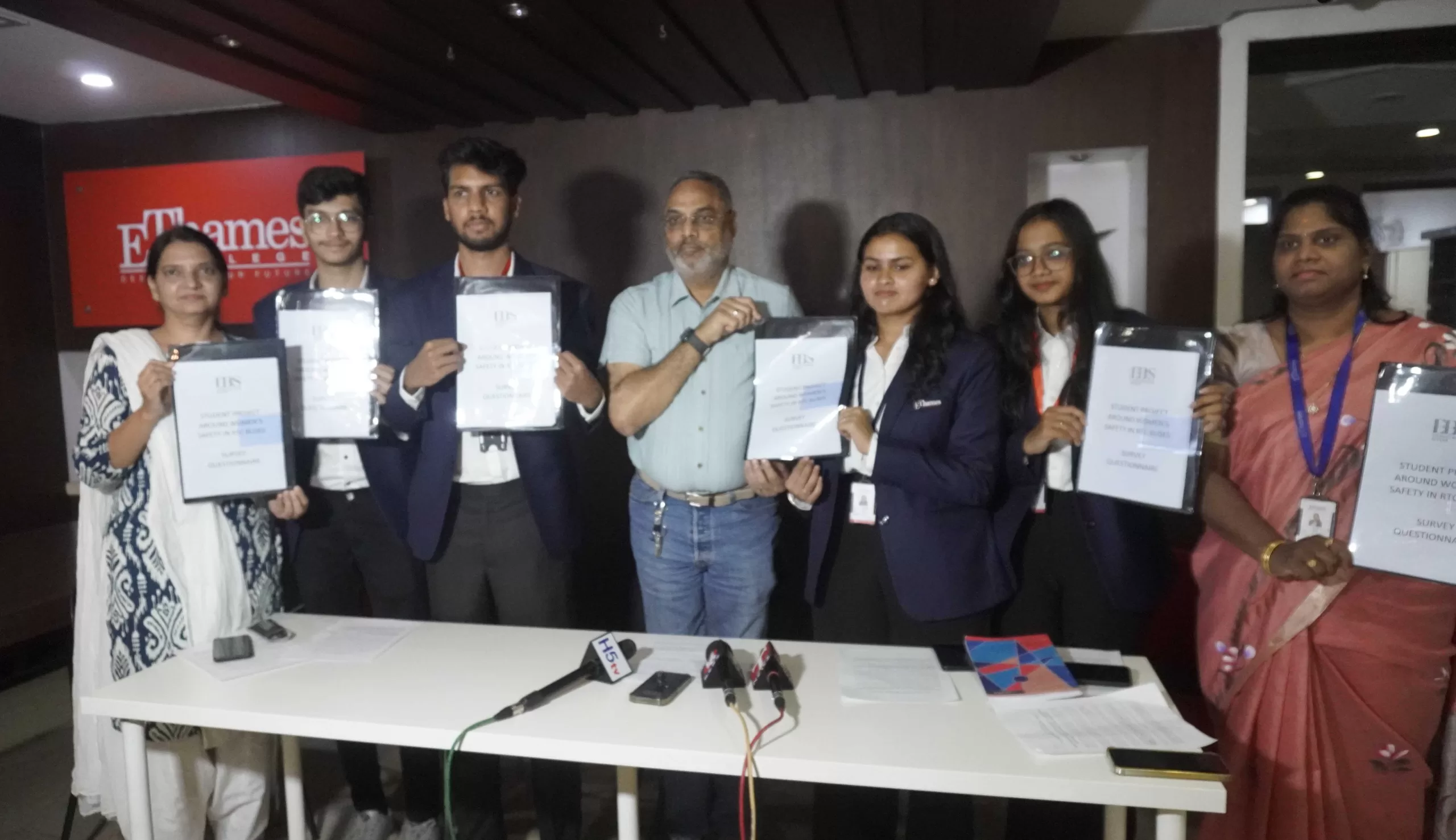
As Telangana’s free bus travel scheme for women transforms lives across the state, a thoughtful study by students from EThames Business School is asking an important question: Are we doing enough to ensure dignity and respect in public transport?
The study, titled “Public Transport Pride,” focuses not just on buses but on the behavior, safety, and shared responsibility that comes with free mobility. Their message is simple yet powerful — when a free ride sparks conflict, what riders need most is respect.
The Reality of Riding Free
The study was conducted over 43 days and included surveys of 480 women and 20+ interviews across major TSRTC routes in Hyderabad. While Telangana State Road Transport Corporation (TSRTC) runs over 9,000 buses daily, serving more than 40 lakh commuters, the increased footfall from the free ride scheme has also brought challenges.
Key findings include:
- 52% of women experienced discomfort while commuting.
- Only 23% were aware of safety tools like mobile apps or helplines.
- Overcrowding, undertrained staff, and limited grievance systems were the top issues raised.
Practical Solutions Proposed by EThames Students
Rather than placing blame, the EThames team focused on solutions. They outlined several suggestions to make public transport more inclusive, responsive, and respectful:
- Gender-sensitivity training for RTC staff
- QR-code-based complaint system in buses and terminals
- Better lighting and clean toilets at key stops
- Women-only buses during peak hours
- Bystander training to promote responsible commuting
- Collaborative policing involving SHE Teams and undercover officers
The goal is to move beyond temporary fixes and create a long-term culture of respectful commuting.
Campaign Ideas to Promote Respectful Travel
To complement infrastructure improvements, the students also suggested public awareness campaigns, such as:
- #MySafeSeat – Stories from women riders
- Ride With Respect – Visual messages in buses and terminals
- SHE Can Travel – Testimonials highlighting safety upgrades
- Bus Buddy Program – Volunteers (students or seniors) onboard during peak times
- Know Your Rights Cards – Displayed in all buses with helpline numbers
As the students put it, “Respect is the ticket every commuter should carry.”
Support from Telangana Officials
The recommendations were welcomed by both the TSRTC and Telangana police leadership.
“We appreciate the EThames study and are already addressing many points — from bus frequency to crew training, helplines, and collaboration with SHE Teams.”
Shikha Goel, IPS, Director General of Women Safety Wing, added:
“Every woman deserves to travel freely and fearlessly. This report strengthens our mission to create safer, inclusive public spaces.”
EThames Students India’s Progress
The report also highlighted best practices from around the world:
- France: Night stop requests closer to home
- Brazil: Real-time complaint apps connected to transit police
- Japan & Colombia: Women-only buses during rush hours
- Singapore: AI-powered surveillance with strict enforcement
- Sweden: Gender-focused route design and lighting
In India, cities like Delhi, Bengaluru, and Mumbai have introduced pink buses, reserved seats, and women’s compartments. However, these remain fragmented solutions. The SHE Teams initiative and free rides for women in Cyberabad IT corridors are promising, but a unified national strategy is still lacking.
Conclusion:
Public transport is not just a way to travel — it’s a shared public space. The EThames research reminds us that respect, safety, and dignity are not just ideals, but essentials. As Telangana takes the lead with its free ride initiative, it’s time to ensure that this freedom comes with safety and inclusivity for all.
Let’s work together to make TSRTC buses role models of public pride and commuter respect.