

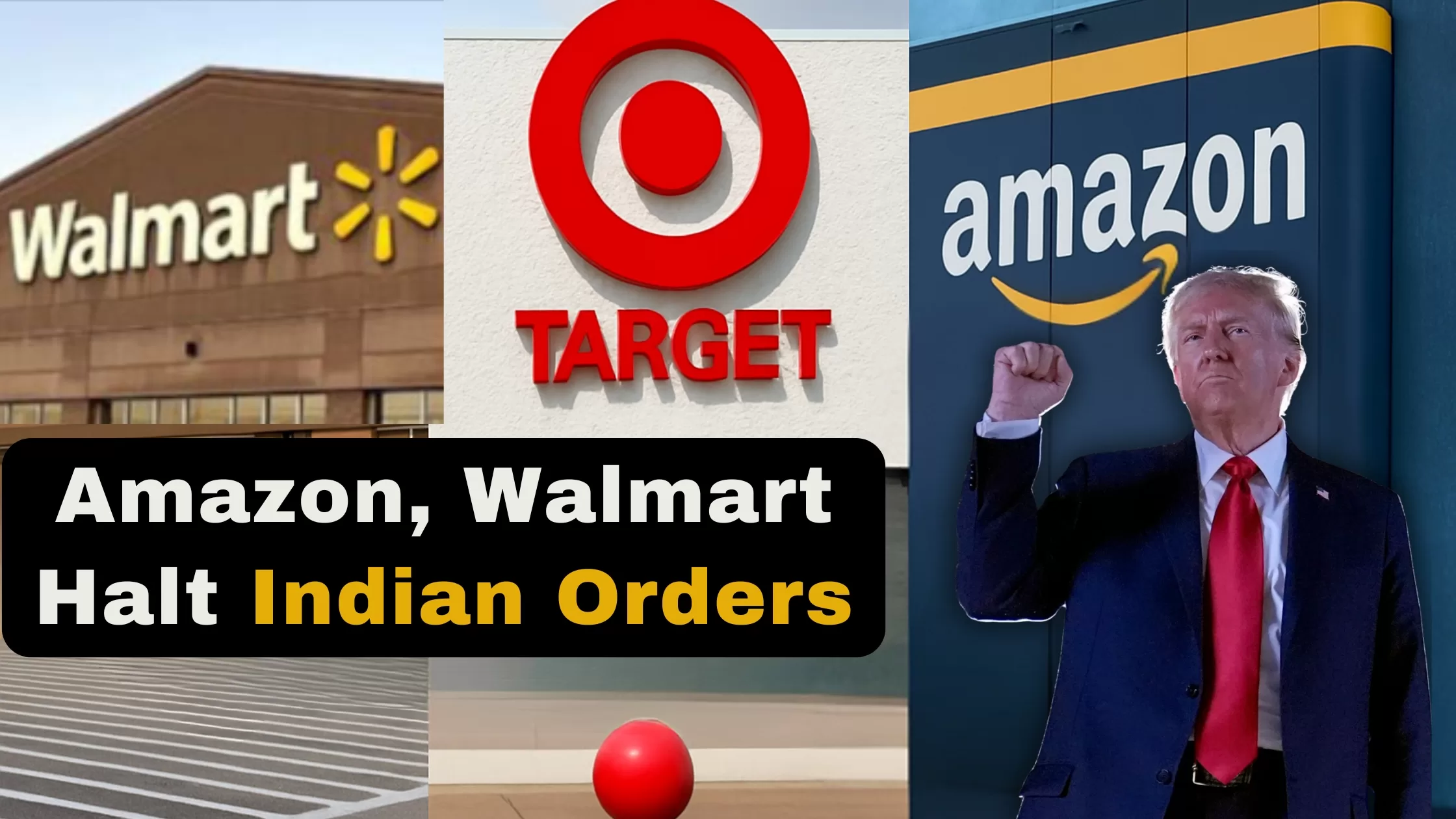
The trade tension between India and the United States just turned up the heat—and Indian exporters are feeling the burn. In a major shake-up, retail heavyweights Amazon, Walmart, Target, and Gap have paused new orders from India, sending shockwaves through the country’s textile and apparel industry.
Why Are US Retailers Pressing Pause?
The trigger is a steep 50% tariff slapped on Indian goods—25% from August 7 and another 25% coming on August 28. These tariffs are the US government’s pushback against India’s continued purchase of Russian oil, and they’ve made exporting to America far more expensive.
Instead of swallowing the added costs, US retailers have told Indian suppliers to halt shipments—and in some cases, cut prices. But with rising production costs, many exporters say that’s simply not possible.
Who’s Taking the Biggest Hit?
Leading exporters like Welspun Living, Gokaldas Exports, Indo Count, and Trident are most exposed, with 40–70% of their sales coming from the US. But the impact goes much deeper—thousands of small and medium textile units across India are facing:
- Suspended production for US-bound orders
- The risk of losing $4–5 billion in annual export revenue
- Uncertainty about when—or if—business will bounce back
The Domino Effect on Global Trade
The halt isn’t just an India problem—it’s shifting global supply chains.
- Order volumes could drop by 40–50% in the coming months
- US retailers may shift sourcing to Bangladesh and Vietnam, where tariffs are roughly 20%
- Indian factories are pausing operations while waiting for clarity from trade talks
Economists warn this is more than a textile issue—it’s about the future of India-US trade ties. Without a quick resolution, other export categories could also feel the pinch, deepening the economic fallout.
The US-India tariff war has put a question mark on billions in exports, thousands of jobs, and India’s position in the global supply chain. Until both governments ease trade tensions, exporters will remain in limbo—watching the clock, and waiting for a green light to get back to business.